
 05 59 93 10 52
 Write to us


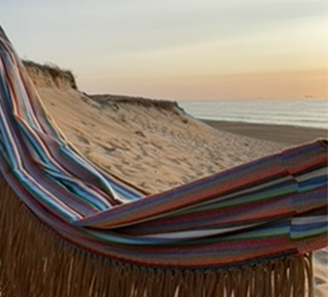
Outdoor and Camping Hammock
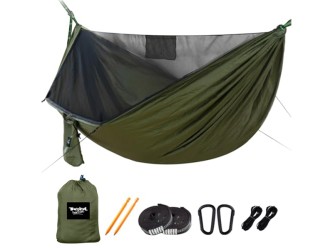
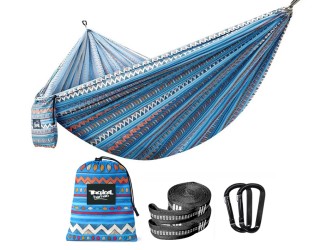
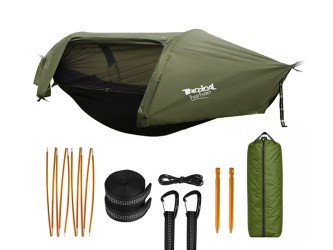
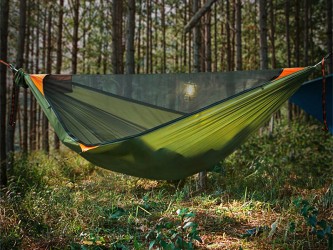
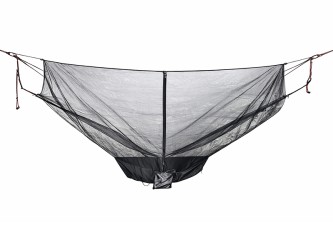
Sleep suspended, flat, away from ground moisture and roots pressing against your ribs. The camping hammock has replaced the tent for many hikers: 550 g in the backpack, or even half that for our ultra-light hammock, two minutes to set up between two trees, and a dry sleeping spot even on soaked ground. A bivouac hammock is not chosen like a garden model: Everything mainly depends on the weight, the quality of the fabric, and the equipment offered, whether integrated into the hammock or available as options: mosquito net, integrated or external rain tarp, sleeping bag, thermal insulation under the hammock, etc.
What really matters in a bivouac hammock
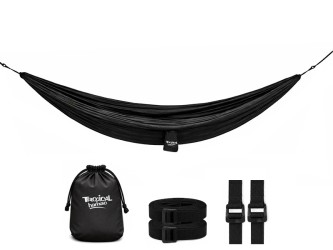
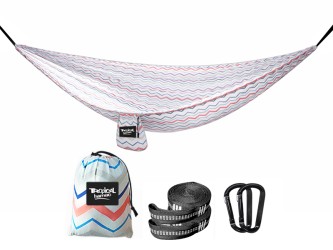
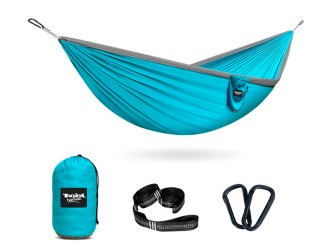
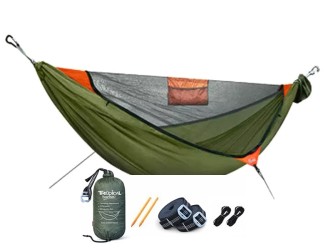
- Weight and bulk. Our travel models weigh from 260 to 700 g and pack into a pocket sewn into the fabric, measuring 20 x 16 cm.
- The fabric. Parachute nylon dries quickly, does not mold, and handles a maximum load of 200 kg without flinching.
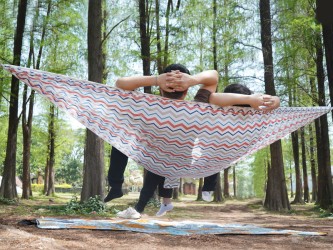
- The size. 260 x 140 cm for sleeping alone, 300 x 200 cm in XL for lying diagonally or spending the night with two.
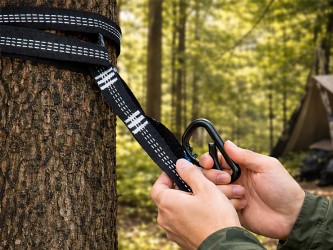
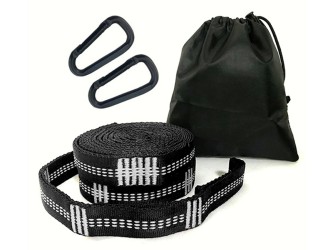
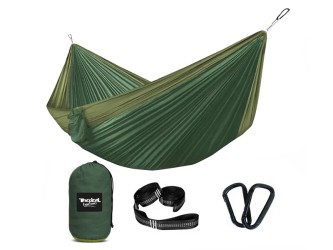
- The straps. Supplied with the hammock, adjustable by buckles, no knots to memorize.
Two ranges, two uses
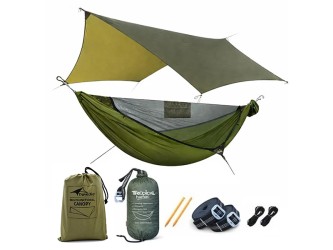
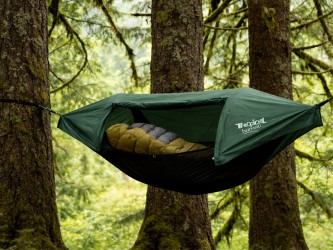
The parachute fabric L hammocks target hiking and itinerant bivouac: Light and compact, they are easy to carry and can directly integrate a mosquito net as well as a rain protection tarp. The XL travel hammocks offer 60 cm more width, for those traveling by van, camping, or simply wanting more space for a nap.
Completing your sleeping setup
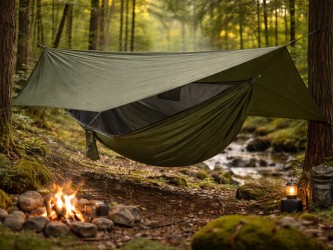
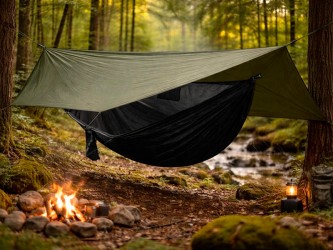
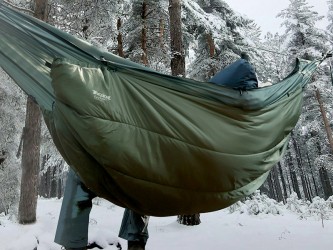
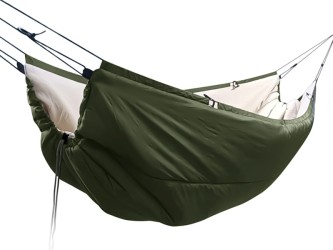
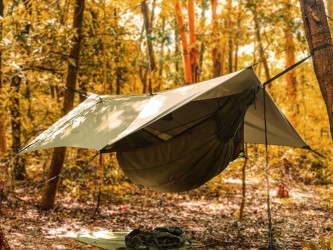
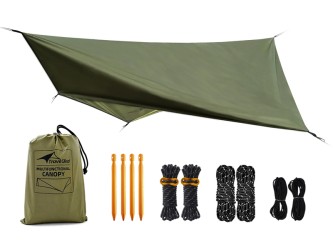
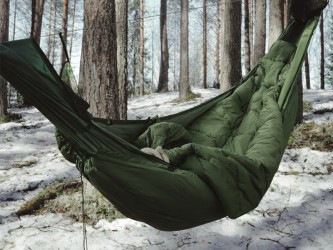
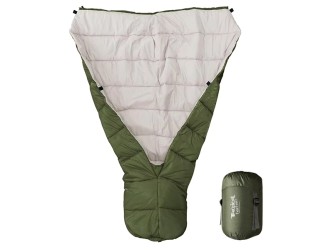
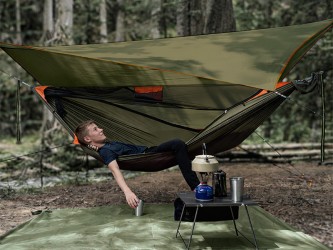
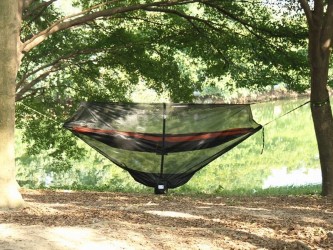
A hammock alone is enough for a break by the water. For a full night, two points must be addressed in advance. First the rain, with a tarp stretched above the hammock. Then the cold, because heat escapes from underneath: a underquilt suspended under the fabric blocks the wind, a topquilt replaces the sleeping bag inside. In summer, a hammock mosquito net solves the insect problem. The whole remains lighter in the backpack than a two-person tent and can be set up without flat ground, which changes everything for mountain hiking.
Hang your hammock anywhere
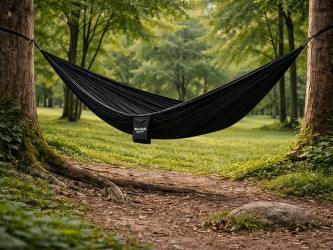
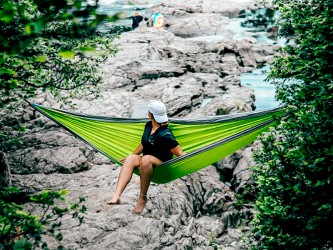
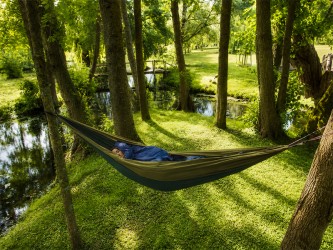
Two sturdy trees 4 meters apart, and the job is done with the supplied straps. Without trees, our fixing kits and carabiners allow you to hook onto a post, a rock, or a camping structure. The details of anchor points and heights are included in our guide to the travel and survival range. For stationary use at the bottom of the garden, rather opt for a cotton garden hammock, wider and more comfortable but much heavier to carry.
Our hammocks by use
Parachute nylon remains a terrain choice. At home, handwoven cotton takes over: garden and outdoor hammock for large suspensions, balcony hammock when space is limited, indoor hammock to extend the season into November.
See less
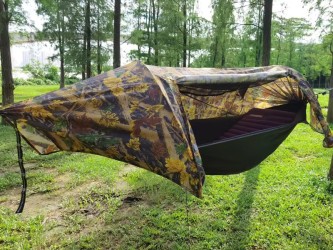
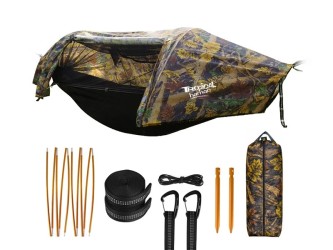
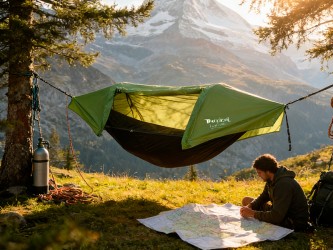
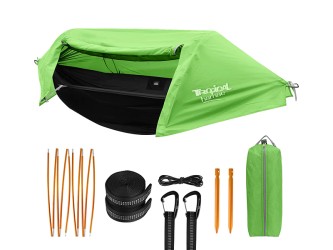
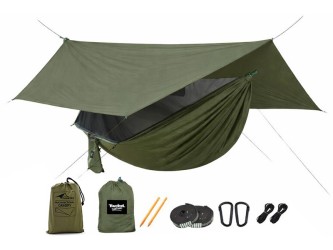
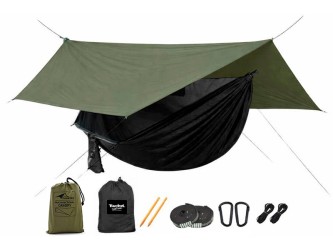
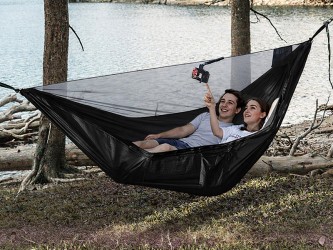
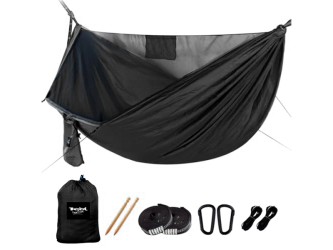
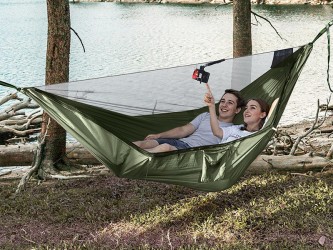
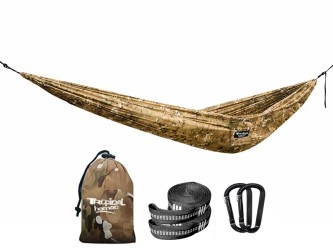
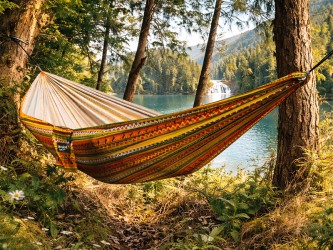
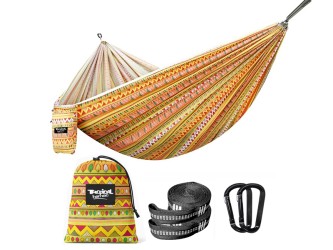
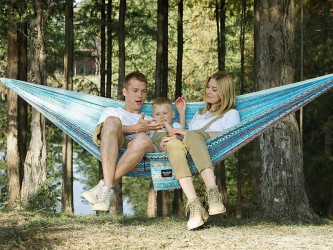
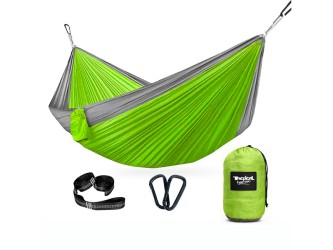
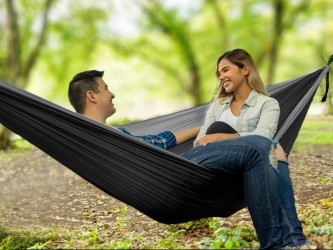
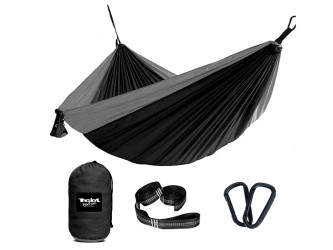

A camping hammock made of parachute fabric supports 200 kg across our entire outdoor range, including straps. This margin allows for two people to sleep or to place a backpack in the hammock. The real limit almost always comes from the anchor point, not the fabric.
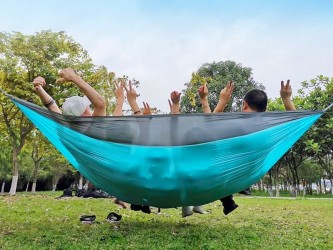
Yes, provided you lie diagonally rather than along the axis: the back remains straight and the fabric does not rise onto the shoulders. A minimum width of 140 cm is necessary, 200 cm in XL for two people.
The cold comes from below, the air compresses the down under the body and the insulation disappears. The solution lies in an underquilt attached under the hammock, complemented by a topquilt inside. A simple sleeping pad slipped into the fabric works for a summer night.
Parachute nylon dries in a few minutes but does not provide protection against rain. A tarp stretched above, made of water-repellent fabric, covers the hammock and leaves a dry space for the bag. It is the accessory not to forget outside the dry season.